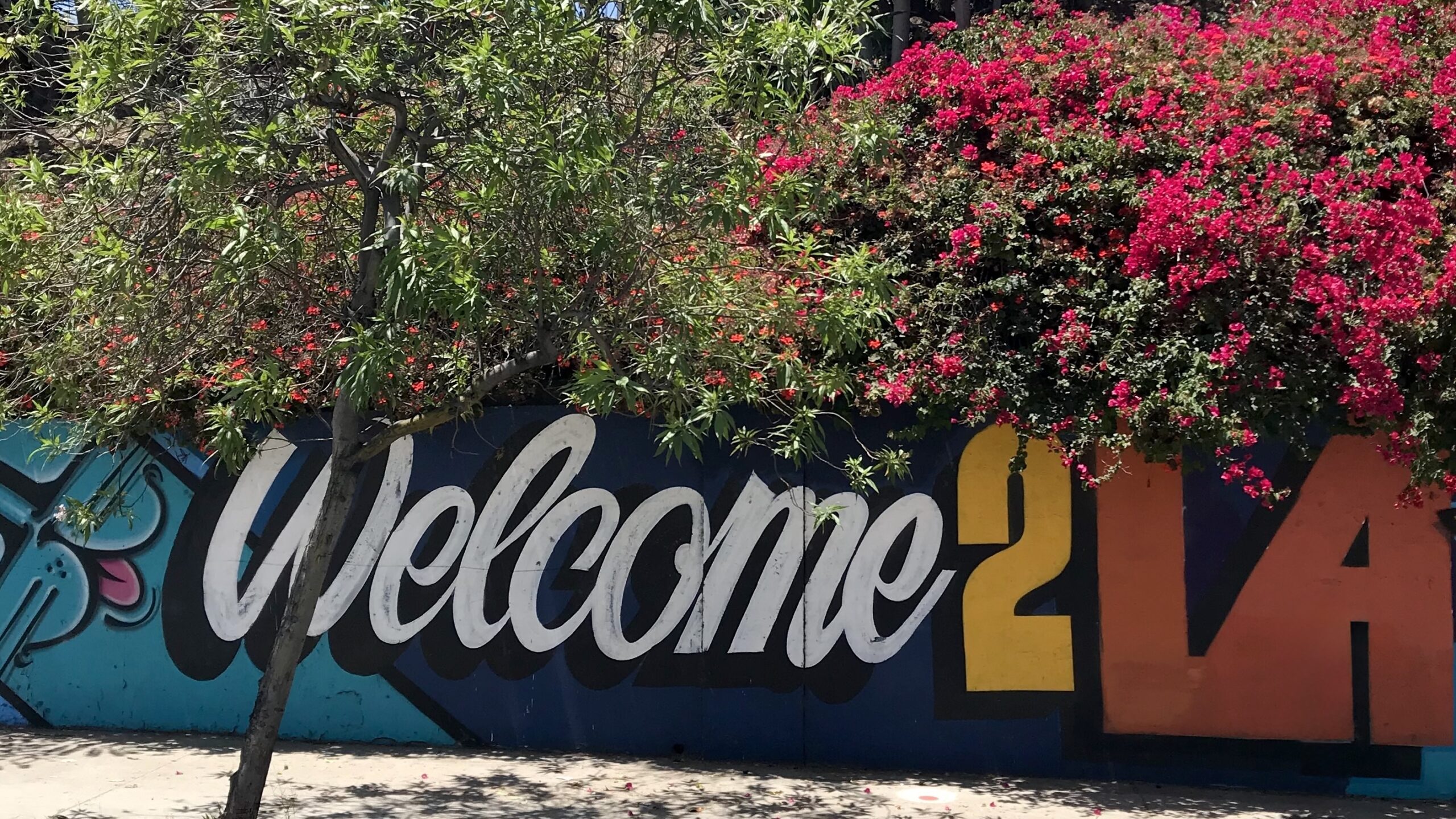
What Do You Call Someone from Los Angeles?
New Yorkers have it easy. So do Bostonians and San Franciscans. Ask what you call someone from Los Angeles and the conversation gets complicated fast.
The answer is some version of the word Angeleno. Or Angelino. Or, if you want to go back to the original Spanish, Angeleño. All three have been in use for more than a century. None has ever fully won.
The word is a demonym, a term for someone who lives in or comes from a particular place. Most cities have one that everyone agrees on. Los Angeles has at least three, and the debate over which one is correct has been going on since the 1880s.
A Word Most People Have Heard and Nobody Can Spell
If you have lived in Los Angeles for any length of time, you have probably seen both spellings. Street signs use one. Official city documents use the other. Sometimes the same document uses both.
The question is not new. It is not going away. It touches on language, identity, immigration, and the long tension between the Spanish roots of this city and the English speaking culture that reshaped it.
Understanding the history does not settle the argument. It does explain why the argument exists, Angelino or Angeleno?
The Culturally Correct Spelling and Why It Matters
The culturally and linguistically grounded form is Angeleno, with an "e." We believe that is the correct spelling, and the history supports it.
From Angeleño to Angeleno: The Spanish Roots
The original word is Angeleño, with a tilde over the "n." In Spanish, that tilde creates the "nyo" sound, the same sound you hear in the word canyon. The suffix "-eño" is the standard Spanish formation for describing residents of a place. Think of Norteño, Salvadoreño, or Limeño.
Los Angeles was founded in 1781 as El Pueblo de Nuestra Señora la Reina de los Ángeles. For decades after its founding, court proceedings, city ordinances, and council meetings were conducted in both English and Spanish. The residents of the pueblo, if they ever needed a word for themselves, almost certainly used Angeleño.
The Oxford English Dictionary identifies early printed evidence for Angeleno in 1857 in the Los Angeles Star. Separately, D.J. Waldie, writing for PBS SoCal’s Lost LA series, notes that the full Angeleño form appears in California of the South, published in 1888 by Walter Lindley and Joseph P. Widney. Read together, those sources suggest that the demonym developed across both Spanish rooted and Anglicized forms over time, which helps explain why the spelling question has never been entirely settled in public usage.
Over time, the tilde disappeared. Printers did not always have the ñ character available. English speakers did not hear the difference between Angeleno and Angelino. The word drifted.
What the LA Times, the OED, and Merriam Webster All Agree On
The major English language authorities have settled on one spelling. Merriam Webster defines Angeleno, with an "e," as "a native or resident of Los Angeles, California." The Oxford English Dictionary uses the same spelling. Encyclopedia Britannica follows suit.
The Los Angeles Times, the city's paper of record, has used "Angeleno" in more than 14,000 news articles since the paper began publishing in the 1880s. "Angelino" appears in roughly 300.
D.J. Waldie, the historian and author of "Holy Land: A Suburban Memoir" and "Becoming Los Angeles," wrote the definitive scholarly treatment of this question for PBS SoCal's Lost LA series. His research traces the full linguistic path from Angeleño through Angeleno to Angelino and back again. His conclusion: there is no single correct answer, but the historical and cultural weight falls on the "e" spelling.
Fernando Guerra and the Leavey Center for the Study of Los Angeles have helped build one of the most sustained bodies of public opinion research on Los Angeles residents and civic identity. That work underscores how strongly questions of local identity continue to resonate across the city and county, even when the exact spelling remains contested.
The historical record and modern reference usage both point more strongly toward the ‘e’ spelling. We respect that history, and we take it seriously, even though the story of Los Angeles has never been as tidy as a dictionary entry.
Two Signs, One Corner, No Agreement
If the major institutions agree, you might expect the city itself to have resolved the question. It has not.
Angelino Heights: LA's Oldest Neighborhood Cannot Decide Either
Angelino Heights is one of the oldest neighborhoods in Los Angeles. It sits on a ridge above downtown, just across the 101 from Dodger Stadium in Chavez Ravine. The original tract maps from the 1880s labeled it Angeleño Heights, with the full Spanish spelling and tilde.
Today, at the intersection of Bellevue Avenue and Edgeware Road, two signs stand within sight of each other. One says Angeleno Heights. The other says Angelino Heights. The city has not resolved its own spelling.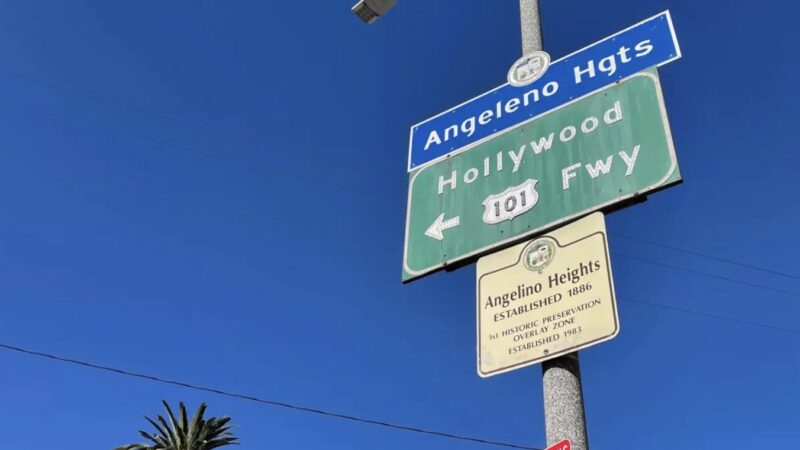
The streetcar destination signs, limited by available typefaces, dropped the tilde and used Angeleno Heights. That was the common spelling for decades.
Then, sometime in the 1950s, city planners anglicized the name further to Angelino Heights. Highway directional signs used that spelling for half a century. In 2008, Los Angeles City Councilman Ed Reyes had the highway signs corrected, but only to Angeleno Heights, not all the way back to the original Angeleño.
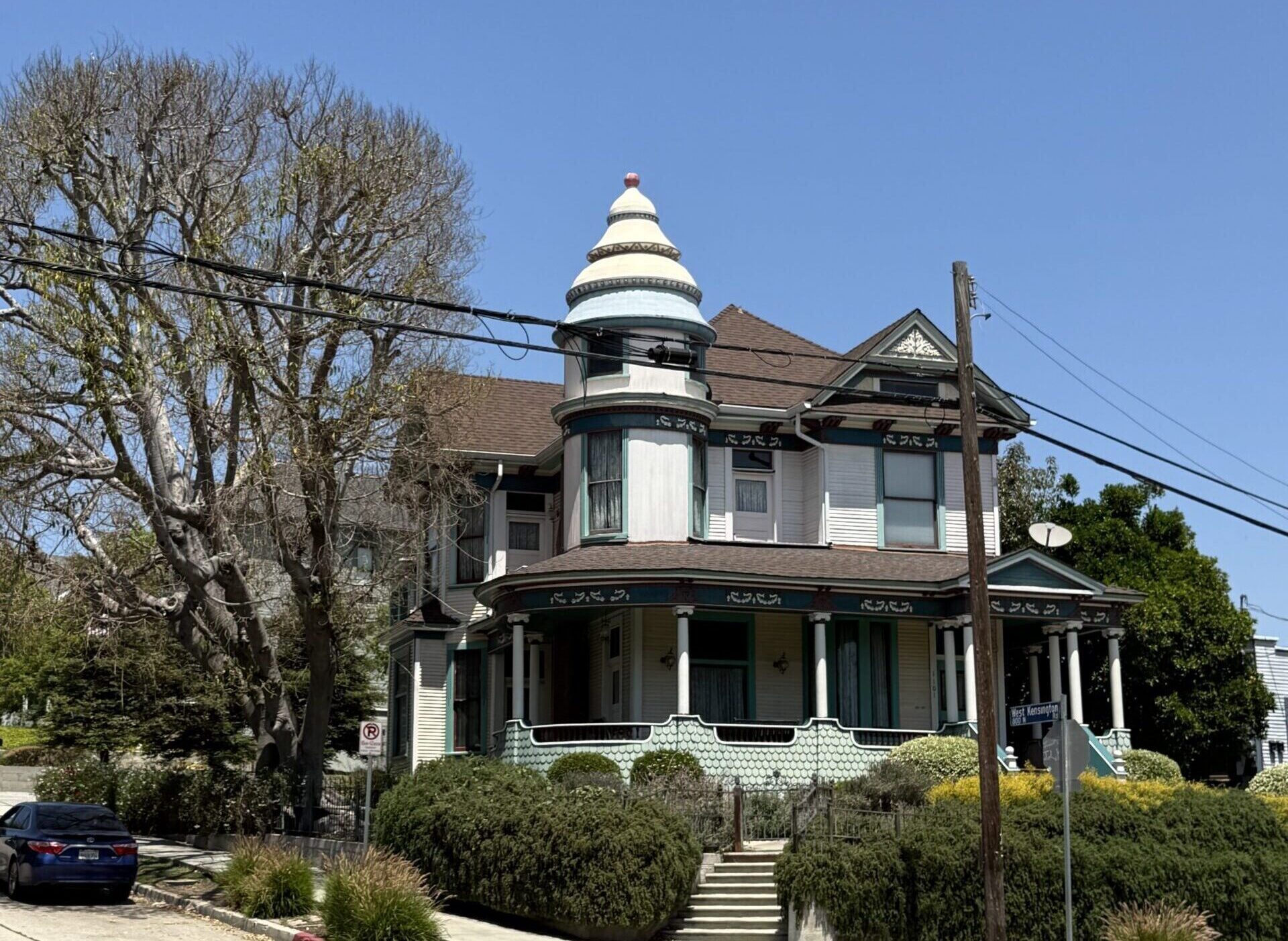
A 2015 report to the Los Angeles Cultural Heritage Commission uses more than one version of the neighborhood name within the same filing, including both Angelino Heights and Angeleno Heights. Even the historical record reflects the instability of the spelling.
See It for Yourself
We filmed a series of YouTube Shorts walking through the neighborhood, exploring the signs, the architecture, and the history behind the name. These are some of the most viewed videos on the Native Angelino Real Estate YouTube channel.
I Love Angelino Heights | Angelino or Angeleno
We Know Los Angeles | Angelino Heights
A Firehouse And Thrift Store | Angeleno Heights
How Native Angelino Became a Brand
The question of Angelino versus Angeleno is not something I discovered when I started a business. It is something I have thought about since I was a kid growing up in Los Angeles. Both spellings were everywhere. Street signs, newspapers, school materials. The inconsistency was part of the landscape, and if you paid attention, you noticed it early.
The Domain That Started It All
When I left corporate America in 2010, I began formulating what would eventually become Native Angelino. The concept took shape over years. The "i" spelling was already part of how I thought about my identity as a native of this city. When it came time to secure a domain, nativeangelino.com was available. The "e" spelling was not.
That is where the brand was built. The website, the content, the client relationships, the brokerage that became Native Angelino Real Estate in 2017. The "i" became the identity not because I believed it was more correct than the "e," but because it was the domain I could build on and it carried the sound and the feeling I wanted.
Branding does not always follow the dictionary. Sometimes it follows the path that was open.
Years in the Making: Acquiring the Other Spelling
I always knew the "e" spelling mattered. It took years to acquire nativeangeleno.com. That domain was finally secured in March 2024. I also own nativeangeleno.co, nativeangelino.la, and multiple related domain variations.
Today, every version points to the same place. If you type the "e" spelling, you reach us. If you type the "i" spelling, you reach us. We own both because this is our city, and we take both seriously.
Today, every version points to the same place. If you type the "e" spelling, you reach us. If you type the "i" spelling, you reach us. We own both because this is our city, and we take both seriously.
The name is a branding decision made by someone who knows the cultural history, not a cultural claim. We are not arguing that Angelino is the correct spelling. We are saying we built a business on it, spent years acquiring the alternative, and the name became our identity.
Dodger Stadium, Chavez Ravine, and the Neighborhood Across the Street
There is a personal dimension to this too.
Dodger Stadium sits in Chavez Ravine, directly adjacent to Angelino Heights. If you stand in the parking lot and look east, you can see the Victorian rooftops of one of the oldest neighborhoods in Los Angeles. If you sit in the upper deck on a clear evening, the downtown skyline rises behind you and the San Gabriel Mountains frame the horizon.
The Dodgers are woven into the identity of this city in a way that few other institutions can match. The fan base reflects the city itself: diverse, loyal, multigenerational, and deeply local. Generations of families have walked through those gates. Some of them were born in Chavez Ravine before it was a stadium.
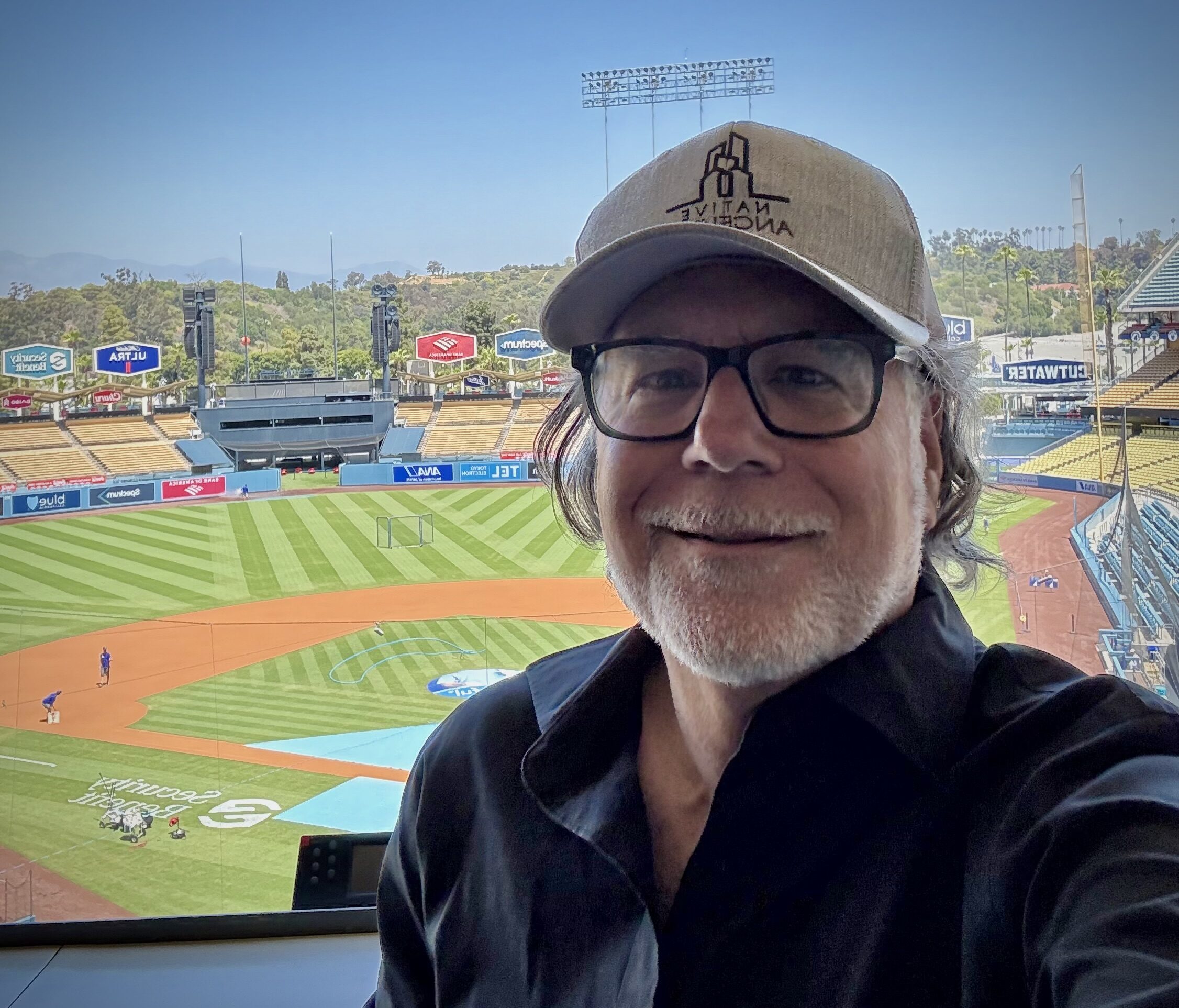
Tom Levine | Native Angelino at Dodger Stadium
Knowing that history, walking those streets, watching games in that
stadium for decades. That is what it means to be a native. The
spelling of the word matters less than the depth of the connection
behind it.
Knowing that history, walking those streets, watching games in that stadium for decades. That is what it means to be a native. The spelling of the word matters less than the depth of the connection behind it.
What Native Means in a City Where Half Were Born Here
The word native carries weight. In a city often defined by people who arrived from somewhere else, being from here is its own kind of credential.
The Census Data Behind the Word
Census data does not neatly answer the question of who counts as native to Los Angeles. What it does show is a city and county shaped by both deep local roots and constant migration, which is part of why the word native still carries real weight here.
These are "born in California" numbers, not "born in Los Angeles." The Census tracks state of birth, not city of birth, so there is no way to know exactly how many current residents were born within the city limits. Someone born in San Diego or Sacramento and now living in LA counts in that figure.
Even without a precise city born figure, the larger point remains valid. In a place defined by movement and reinvention, there is also a substantial population with deep California and Los Angeles roots, and that long term connection often produces a different understanding of neighborhoods, history, and place.
Neighborhood Expertise Is Not a Tagline
Knowing the difference between Angelino and Angeleno is a small thing. It does not close a deal or negotiate a contract. What it represents is larger.
It represents the difference between someone who reads about a neighborhood and someone who grew up walking through it. Between someone who studies a market and someone who watched it change over decades. Between someone who moved here for business and someone whose family has been here for generations.
Tom Levine is a Los Angeles native and real estate broker who founded Native Angelino Real Estate in 2017. The name was a branding decision, but the identity behind it is not. It is 30 years of finance, an MBA from USC Marshall School of Business, and a lifetime of knowing this city from the inside.
We know Los Angeles.
If you are navigating a real estate decision in Los Angeles and want to work with someone who knows this city natively, we are available to talk.